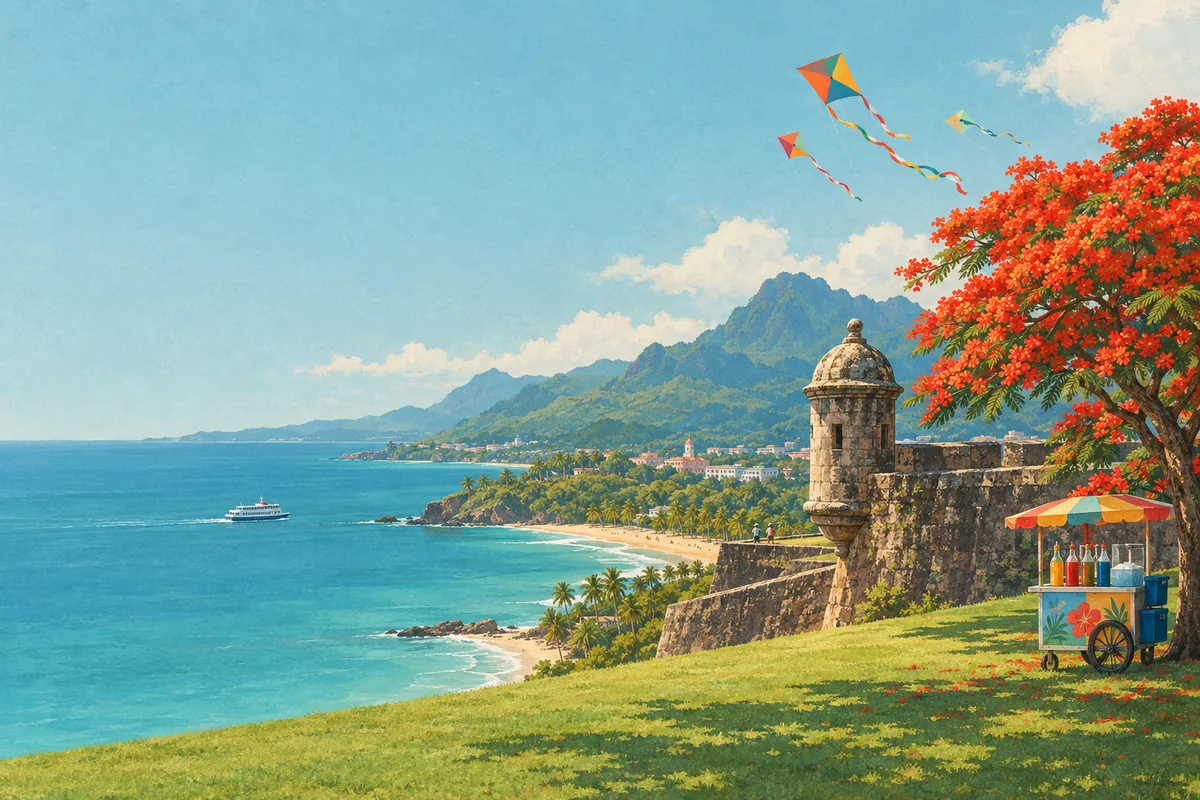
Puerto Rican cooking, cocina criolla, grew out of Taíno, Spanish and African traditions, and you can taste all three on one plate: root vegetables and cassava from the island's first inhabitants, pork, rice and olive oil from Spain, and plantains, frying techniques and coconut from Africa. It is not spicy-hot. Its flavor comes from sofrito, a base of peppers, onions, garlic, cilantro and culantro, and from adobo seasoning. Here are five dishes every visitor should try, how to order them, and where they taste best.
1. Mofongo
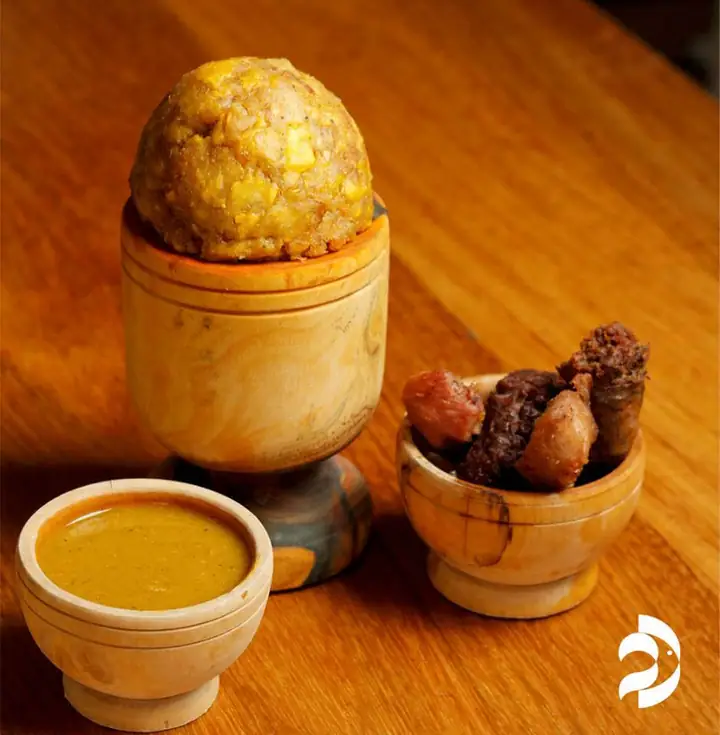
What it is: green plantains are fried, then mashed in a wooden mortar called a pilón with garlic and either pork cracklings (chicharrón), butter or oil, and shaped into a dense, savory dome. It is the island's signature dish.
How to order: mofongo comes as a side or as the main event, either stuffed (relleno) or topped with shrimp in garlic sauce (al ajillo), skirt steak (churrasco), stewed chicken, octopus or crab. Variations include mofongo de yuca (made with cassava) and trifongo, which mixes green plantain, sweet plantain and yuca. A good mofongo is moist and garlicky, never dry. Most kitchens serve it with a little broth or sauce on the side for that reason.
Where: nearly every criollo restaurant in Old San Juan, Santurce and Condado serves it, and seaside restaurants pair it with fresh seafood. Try a seafood mofongo in fishing villages such as Las Croabas in Fajardo or on the west coast around Boquerón and Combate.
2. Alcapurrias (and other frituras)
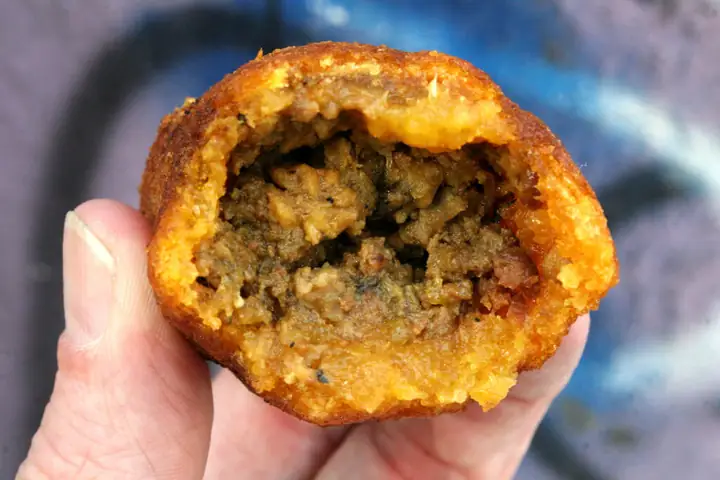
What it is: a torpedo-shaped fritter made from a dough of grated green banana and yautía (taro root), stuffed with seasoned ground beef, crab or other seafood, then deep-fried until the outside is crisp and the inside soft. Alcapurrias are the star of the fritura stand, alongside bacalaítos (crisp codfish fritters), pastelillos (fried turnovers) and piononos (sweet plantain rings filled with meat).
How to order: point and pay. They are eaten by hand, often with hot sauce or a squeeze of garlic-vinegar pique. If a tray has been sitting, ask whether they can fry you a fresh one. The difference is real.
Where: the beach kiosks. The wood-fired stands of Piñones, just east of Isla Verde, are famous for crab alcapurrias, and the long row of kiosks at Luquillo is a classic stop on the way back from El Yunque.
3. Lechón asado
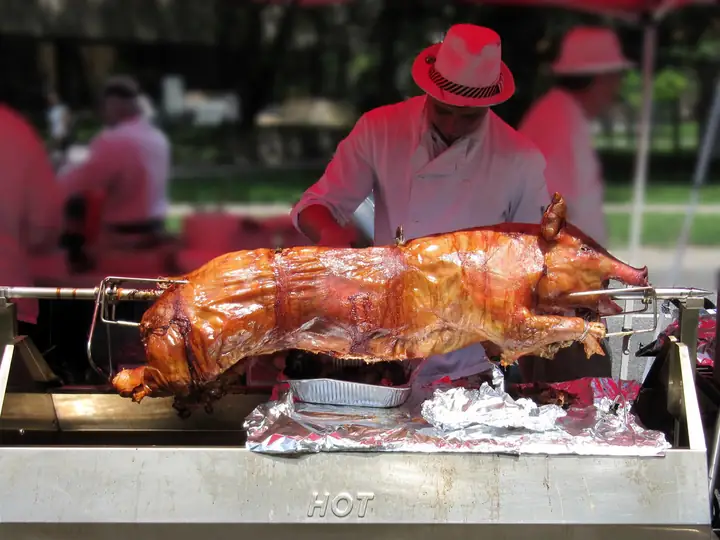
What it is: a whole pig, rubbed with garlic, oregano and adobo and slow-roasted on a spit over coals for hours. The prize is the cuerito, skin roasted until it cracks like glass.
How to order: by the pound at a lechonera. Ask for a mix of meat and cuerito, plus sides such as arroz con gandules, boiled root vegetables and morcilla (blood sausage). Pavochón, turkey roasted lechón-style, is a common alternative.
Where: the mountain lechoneras of Guavate in Cayey, along Road 184, are the best-known destination, especially on weekends with live music. You will also find lechón at roadside stands across the island and on almost every Christmas table.
4. Pasteles
What it is: not pastries. Puerto Rican pasteles are closer to tamales. A dough (masa) of grated green banana, plantain and yautía, colored with annatto (achiote) oil, is filled with a pork stew that often includes olives, chickpeas or raisins. Each one is wrapped in a banana leaf, tied with string and boiled. Some families make pasteles de yuca with a cassava dough instead.
How to order: unwrap the leaf at the table and eat the pastel with a fork, usually alongside arroz con gandules and a splash of hot sauce. They are often sold by the dozen, frozen, during the holidays.
Where: pasteles are a Christmas dish. Families gather in early December to grate and wrap them in big batches, so November through January is the time to find them. See our guide to Christmas in Puerto Rico. Outside the season, look for them at lechoneras, criollo cafeterias and markets such as La Placita de Santurce.
5. Arroz con gandules
What it is: rice cooked with pigeon peas (gandules), sofrito, pork and olives until each grain is seasoned through. It is considered the island's national dish, and it is on the table at virtually every celebration.
How to order: it comes as the side to lechón, pasteles or roast chicken. Ask for some pegao, the crispy layer of rice from the bottom of the pot that many locals consider the best part.
Where: any criollo restaurant or cafetería, and every lechonera in Guavate.
Also worth tasting
- Piña colada. Puerto Rico declared it the official national drink in 1978. The Caribe Hilton says its bartender created it in 1954, and Old San Juan's Barrachina restaurant also claims it.
- Mallorca. A sweet, spiral breakfast bun dusted with powdered sugar, often pressed with ham and cheese.
- Tembleque and coquito. A coconut pudding and a coconut-rum holiday drink.
- Local coffee and rum. Puerto Rico grows coffee in its central mountains and is one of the world's great rum producers. Tour Casa Bacardí across the bay from Old San Juan.
Good to know
- Puerto Rican food is seasoned, not hot. Hot sauce (pique) is on the table if you want heat.
- Kiosks and lechoneras are busiest on weekends, and some open only then.
- Pasteles and coquito are seasonal (roughly November to January).
- Vegetarians: ask for mofongo with vegetables, and check whether rice and beans were cooked with pork.