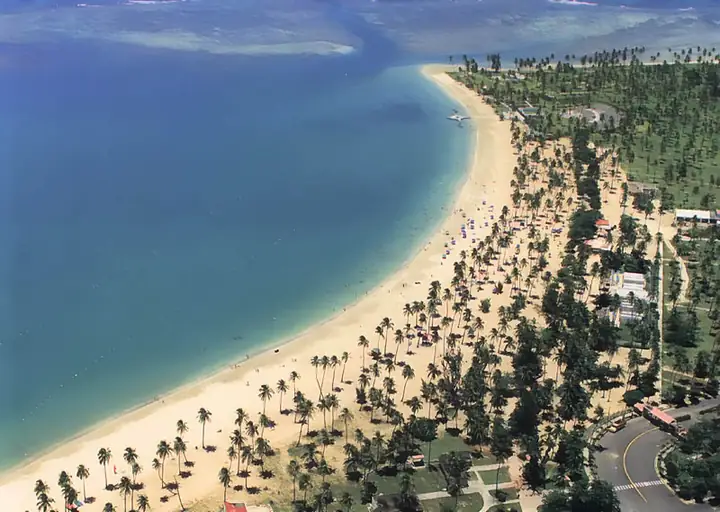
Drive five minutes east of the last high-rise in Isla Verde, cross the small bridge at Boca de Cangrejos, and the city ends abruptly. Piñones is a coastal strip in the municipality of Loíza: palm groves, dunes, empty-looking beaches, a large mangrove forest and a road lined with wood-fired food stands. It is where San Juan residents go on weekends for codfish fritters and a cold beer by the sea, and it is the easiest way for visitors staying near the airport to see a slower, older side of Puerto Rico without a long drive.
The kiosks: what to eat
Road 187, also called Calle Boca de Cangrejos, is lined on both sides with kioskos and chinchorros: small, mostly family-run stands, many frying over open wood fires. Most of the food is frituras, fried snacks you eat standing up or at a plastic table facing the water:
- Alcapurrias: torpedo-shaped fritters made from a dough of grated green banana and yautía (taro), stuffed with ground beef or crab (jueyes). Crab alcapurrias are a Loíza specialty.
- Bacalaítos: thin, crisp, plate-sized codfish fritters.
- Pastelillos and empanadillas: turnovers filled with beef, chicken, cheese, crab, conch or lobster.
- Arepas and piononos: coconut-flavored fried bread, and sweet plantain rings wrapped around ground beef.
- Coconut water served straight from the coconut, and piña coladas at the bars.
The cluster of stands near the bridge at Boca de Cangrejos is the busiest, with the most choice. Farther east the stands thin out and some sit-down seafood restaurants appear. Many kiosks are busiest, and some only open, on weekends. Ask for your fritter fresh from the oil rather than from the display case.
The Piñones bike path
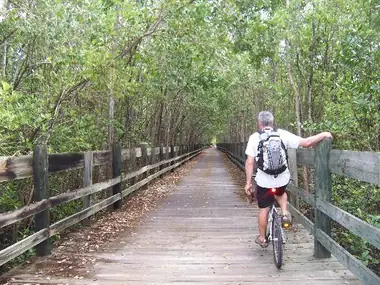
Paseo Piñones, also called the Paseo Tablado, is a shared walking and cycling path of about 11 kilometers (7 miles). Part of it is asphalt and part is wooden boardwalk, and it winds past the beach, through dunes and palm groves, and into the mangrove forest around the lagoons. It is almost entirely flat, which makes it one of the most pleasant easy rides in the San Juan area, and the sea breeze helps. Bikes can be rented locally, including at the community-run Piñones cultural and ecotourism center (COPI), but availability and hours vary, so call ahead or bring your own. Some boardwalk sections can be uneven or under repair after storms, so watch the surface.
Mangroves, lagoons and kayaking
Behind the beach is Bosque Estatal de Piñones, Piñones State Forest, a protected area of mangroves, lagoons, salt flats and coastal forest that is home to herons, pelicans and many other birds. Laguna de Torrecilla, next to Road 187, has an observation tower. Kayak tours paddle through narrow mangrove channels into the lagoons, and you can watch planes from Luis Muñoz Marín International Airport pass low overhead. Book with an established local operator or the cultural center, go in the morning when it is cooler and calmer, and bring bug repellent for the mangroves.
The beaches
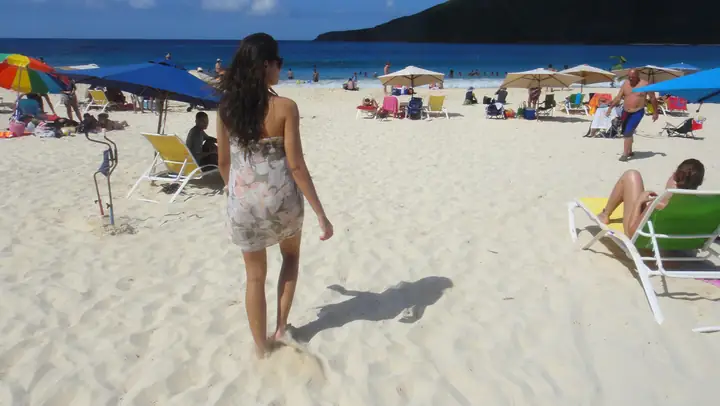
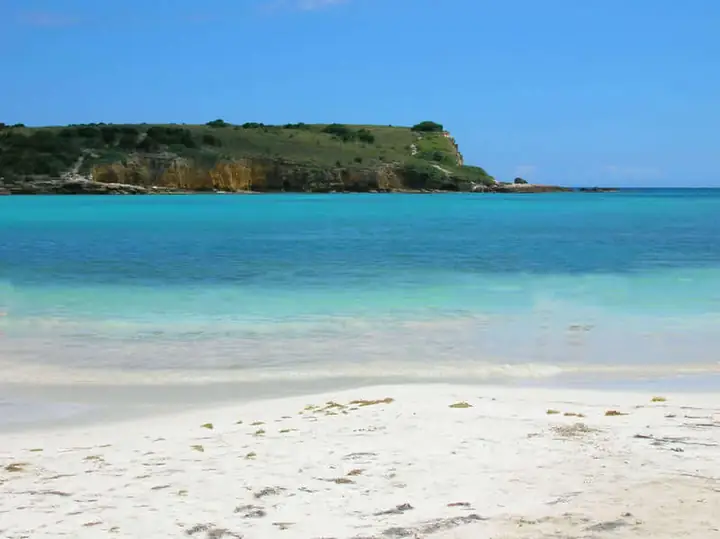
Piñones has a long run of beaches, including Playa La Posita, Vacía Talega and Aviones, a popular surf spot. They are beautiful, but treat the water with respect. Large stretches have no lifeguards and no public restrooms, and currents can be strong. Some sections have reefs or rock shelves that create calm pools at low tide, while others face open ocean. Check the National Weather Service rip current forecast for the north coast, swim only where you can see local families in the water, and stay out when the surf is up. For a lifeguarded beach nearby, go to Isla Verde.
Loíza's culture
Piñones belongs to Loíza, a town known as a center of Afro-Puerto Rican heritage. It is a stronghold of bomba, the island's Afro-Puerto Rican drum-and-dance tradition, and of the coconut-shell vejigante masks worn during the town's Fiestas de Santiago Apóstol each July. If you get the chance to see a bomba session or visit an artisan's mask workshop, take it: it adds real depth to a day that might otherwise be just about food and beach.
Getting there
Piñones starts just east of Isla Verde along Road 187, about 10 minutes from the airport. A car gives you the most freedom to stop at different kiosks and beaches, but parking along the road fills up on weekend afternoons. Taxis and Uber can drop you at Boca de Cangrejos, though finding a ride back from farther east can be harder, so plan your return. Public bus service exists but is slow and infrequent.
Practical tips
- Timing. Weekend afternoons are lively and crowded. Weekday mornings are quiet, cooler and better for biking and kayaking, though fewer kiosks are open.
- Cash. Some kiosks take only cash, so bring small bills.
- Car safety. Leave nothing visible in a parked car.
- Bring sunscreen, water, a hat, bug spray for the mangroves and a towel.
- How long. Allow two hours for food and a stroll, half a day if you add biking or kayaking.
- Accessibility. The paved parts of the path and the main kiosk area near the bridge are the easiest to get around. Sand, boardwalk gaps and roadside parking make the rest harder.
Combine it with
Piñones pairs naturally with a beach day in Isla Verde or Ocean Park. Continue east along the coast toward Luquillo Beach and its own row of kiosks, then into El Yunque. It also makes a good first or last stop of a trip because it is so close to the airport.
Good to know
- Where: Road 187, Loíza, just east of Isla Verde.
- Eat: alcapurrias (try crab), bacalaítos, pastelillos, coconut water.
- Paseo Piñones: about 11 km (7 mi) of flat, mixed boardwalk and asphalt path.
- Many beaches have no lifeguards. Check the rip current forecast before swimming.
- Weekends are busiest, and some kiosks open only then.