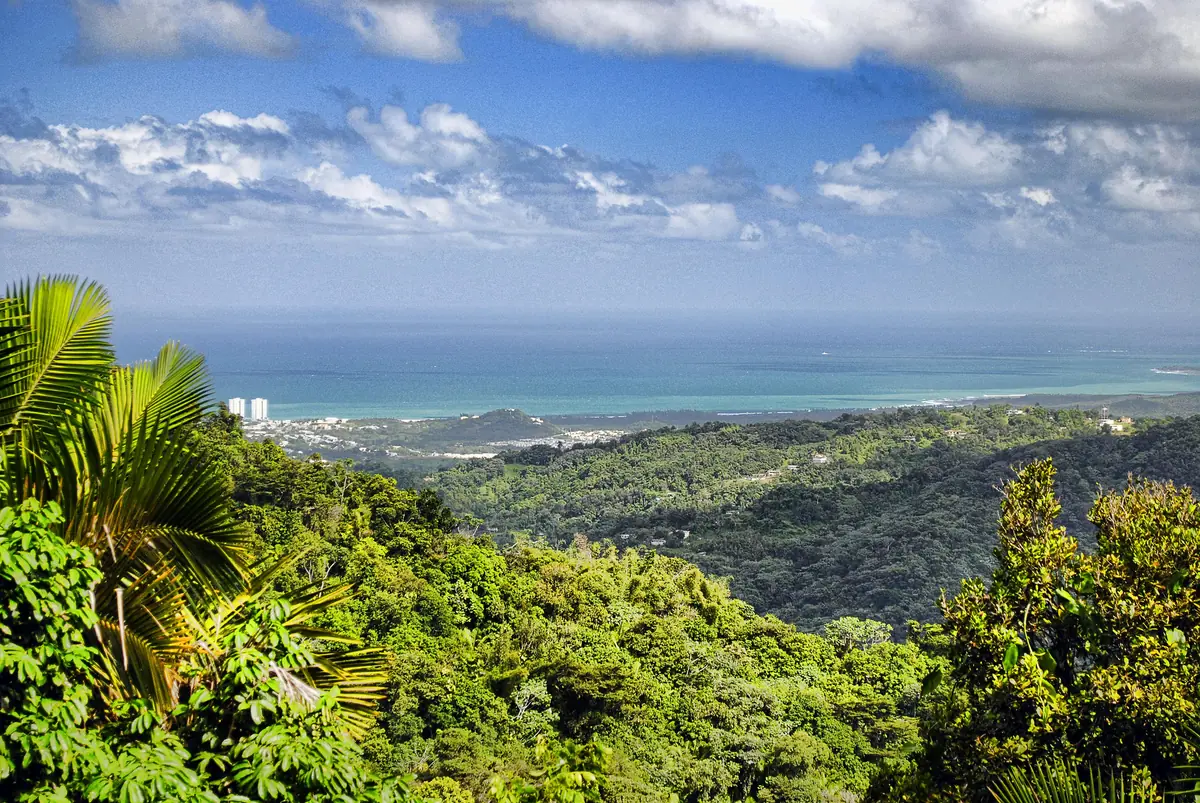
El Yunque National Forest covers roughly 28,000 acres of the Sierra de Luquillo in northeastern Puerto Rico, about an hour's drive from San Juan. It is the only tropical rainforest in the U.S. National Forest System, and one of its smallest units, but it packs a lot into that space: cloud-wrapped peaks, rivers and waterfalls, stone observation towers, and a soundtrack of coquí frogs that gets louder as the light fades. Most visitors see it in a day trip, and with a little planning around the current entry rules and trail closures, a day is enough to get a real feel for the place.
Why El Yunque matters
These mountains have a long history of protection. The Spanish Crown set aside part of these mountains in the 19th century, and the area later became, in turn, the Luquillo Forest Reserve, the Caribbean National Forest and, since 2007, El Yunque National Forest. The name is usually traced either to a Taíno word, Yuké, or to the Spanish word for anvil, which describes the flat-topped profile of El Yunque peak. The highest summit, El Toro, reaches 3,494 feet (1,065 m), and the upper slopes can receive more than 200 inches of rain a year.
El Yunque is also the stronghold of the Puerto Rican parrot, the only parrot native to the United States. It was listed as endangered in 1967, and by 1975 only 13 birds were left in the wild. A captive-breeding and release program has since established wild flocks, the oldest of them here. You are unlikely to see one, but you will hear plenty of other birds.
Hurricane María hit the forest hard in 2017. The canopy has largely grown back, but roads, trails and retaining walls are still being rebuilt with federal emergency funds, which is why some favorite trails remain closed years later.
Entry rules and what is open in 2026
The main recreation corridor is along PR-191 North in Río Grande, entered through the La Coca entrance station. The reservation system that operated through Recreation.gov during and after the pandemic was dropped in August 2023. Today entry is free and first-come, first-served, from 8:00 a.m. to 5:00 p.m. The Forest Service limits the number of vehicles inside because parking is scarce; when the corridor is full, the gate closes and reopens only as cars leave. On weekends and holidays, arrive before the gate opens.
Fees may be coming. In 2026 the Forest Service proposed charging at El Portal Rainforest Center and the La Mina Recreation Area, both currently free. Federal rules require six months' notice before new fees take effect, so nothing is expected before 2027, and the plan has drawn local opposition. Check the forest's website before you go.
Trail status is the other thing to check. As of this update, the Forest Service lists the La Mina Trail and Big Tree Trail as closed, along with the Baño de Oro trail, which sits inside a road-repair project. The El Yunque Trail is open only as far as the Los Picachos spur; the final stretch to El Yunque peak is closed because of a damaged retaining wall. Dispersed camping is not available anywhere in the forest. Conditions change, so read the official El Yunque alerts page the day before your visit.
What to see and do
- El Portal Rainforest Center on PR-191, before the La Coca gate, has exhibits on the forest's ecology and history and is a good first stop for orientation. It closes for maintenance for about two weeks every September (September 8–20 in 2026).
- La Coca Falls, right beside the road, is the first waterfall you pass inside the corridor.
- Yokahú Tower, a 69-foot observation tower built in the early 1960s, looks out toward the coast and the offshore cays on a clear day.
- Mount Britton Trail and Tower. A short but steep climb through palm and cloud forest to a stone tower built by the Civilian Conservation Corps in the 1930s. Allow at least an hour round trip.
- Juan Diego Creek and other short walks along the road for small cascades and pools.
When PR-191 is busy, the Forest Service points visitors to the Quebrada Grande area in Río Grande, Puente Roto in Luquillo and Río Sabana on the Naguabo side. These have fewer facilities but are good for a river dip.
Getting there
From San Juan, take PR-26 and PR-66 east toward Río Grande, then continue on PR-3 and turn south onto PR-191. Without traffic the drive takes about 45 minutes to an hour. Park only in designated spaces.
There is no public transit to the forest. Rideshare drivers can drop you off, but the apps do not allow pickups at the recreation corridor or El Portal, and cell signal is patchy, so you can easily get stranded. Either drive yourself or book with one of the tour operators that hold Forest Service permits; the forest publishes a list of authorized operators on its website.
Practical tips
- Timing. Weekday mornings are the quietest. Afternoon showers are common all year, and rivers can rise fast after heavy rain. Never cross a swollen stream.
- What to bring. Shoes with good grip (trails are wet and mossy), a light rain jacket, insect repellent, water and snacks. Food options inside the corridor are limited.
- How long to allow. Half a day covers El Portal, the towers and a short hike. Add time if you want to swim at Luquillo afterward.
- Accessibility. El Portal and some roadside viewpoints are the most accessible areas; most trails are steep, uneven and slippery.
Combine it with
El Yunque pairs naturally with an afternoon at Luquillo Beach and lunch at the Luquillo kiosks, 15 minutes away. If you are staying on the east coast, add a night kayak on the Fajardo bioluminescent bay or a guided walk at Las Cabezas de San Juan. Birders should also read our guide to bird watching in Puerto Rico.
Good to know
- Entry to the PR-191 corridor is free with no reservation; the gate operates 8:00 a.m. to 5:00 p.m. and closes when parking is full.
- La Mina and Big Tree trails are closed as of this update; check the alerts page before you go.
- Proposed fees for El Portal and La Mina could start no earlier than 2027.
- Do not count on a rideshare pickup or cell service inside the forest.
- For questions, call the Forest Supervisor's Office at (787) 888-1880.