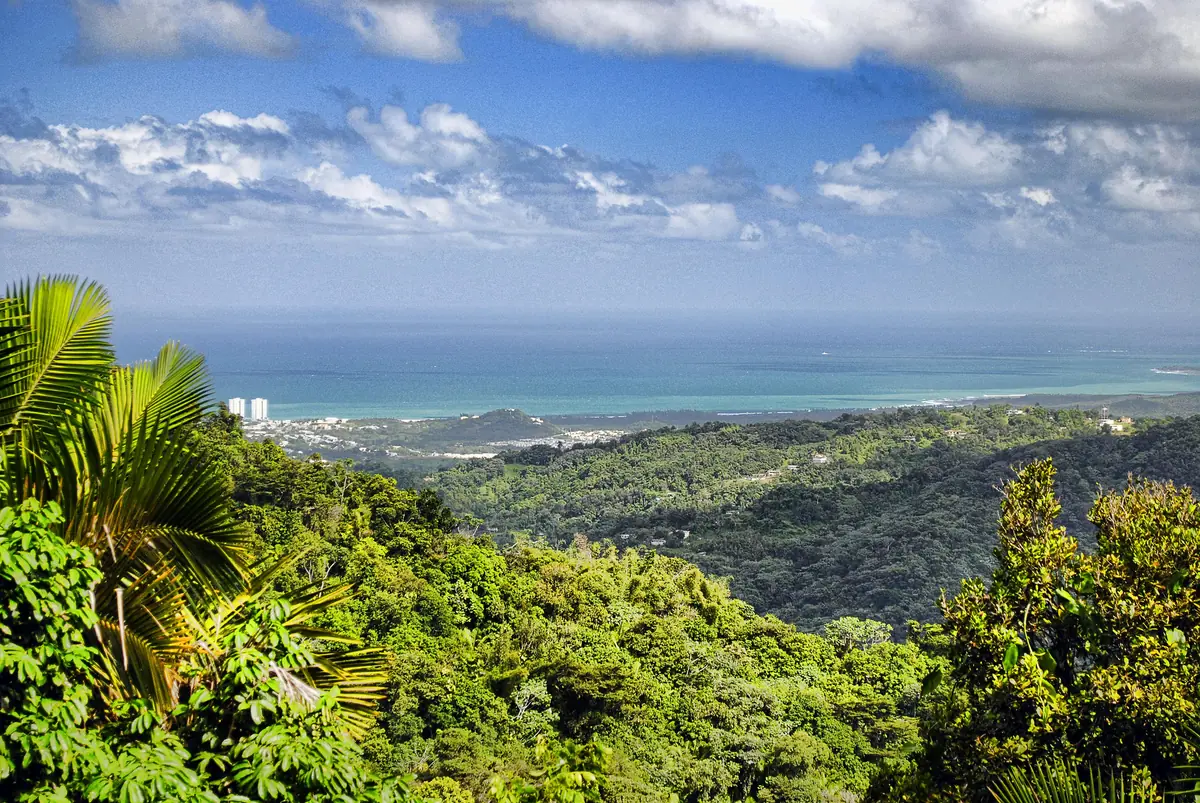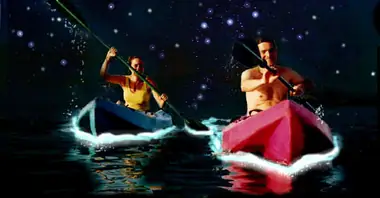
Laguna Grande, Fajardo's bioluminescent bay, is a shallow lagoon ringed by mangroves on the northeastern tip of Puerto Rico. On a dark night, every paddle stroke, every fish and every hand trailed through the water leaves a streak of blue-green light. It is one of three bioluminescent bays in Puerto Rico, and it is the easiest to reach from San Juan: about an hour's drive, with no ferry or flight. Visits are at night, with a licensed guide, and almost always by kayak.
Why the water glows
The light comes from dinoflagellates, single-celled plankton that give off a brief flash when the water around them is disturbed. Scientists think the flash works as a defense: it startles the small animals that eat the plankton and can draw bigger predators that eat those animals. The chemistry is the same family of reactions that lights up fireflies, a compound called luciferin reacting with oxygen, and it runs on a daily clock, so the organisms glow most strongly at night.
Laguna Grande can hold enough of these organisms to light up because of its setting. The lagoon is shallow and connects to the sea through a narrow channel, so the plankton are not flushed out, and the surrounding red mangroves supply nutrients to the water. That same balance makes the bay fragile. In 2013 the glow faded for about a week during nearby sewer construction and recovered after the work stopped. In recent years, heavy sargassum seaweed along the coast has also worried scientists, because rotting seaweed changes the lagoon's water chemistry. Brightness varies from night to night, and no operator can guarantee a vivid show.
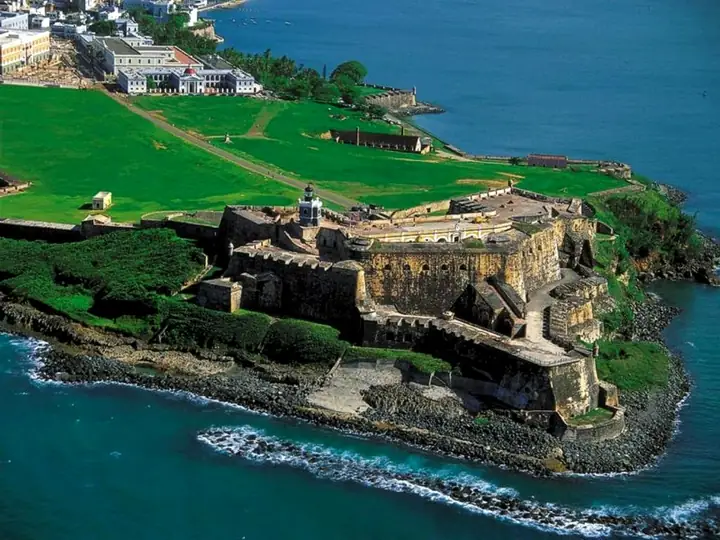
Laguna Grande sits within the Cabezas de San Juan Nature Reserve, protected by the Conservation Trust of Puerto Rico since 1975. Mosquito Bay on Vieques is generally considered the brightest of Puerto Rico's three bays. Fajardo's appeal is how easy it is to get to, and the paddle through the mangroves at night.
What a tour is like
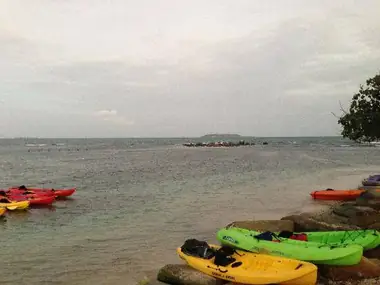
Most tours start around sunset from Las Croabas, the fishing village at the end of PR-987. After a short safety briefing, groups paddle two-person kayaks single file through a narrow channel tunneled by mangroves, with the guide leading and a light on the last boat. The channel is dark and winding, and it is the part people remember most. It opens into the lagoon, where the guide explains the science and you can see the glow by dragging your hand or paddle through the water. Tours generally take about two to two and a half hours.
If you cannot or prefer not to paddle, some licensed operators run quiet electric-boat trips on the lagoon. Para la Naturaleza, which manages the Cabezas de San Juan reserve, also offers guided programs in the reserve, including a boardwalk over the mangroves at the edge of Laguna Grande.
Rules that protect the bay
- No swimming. The Puerto Rico Department of Natural and Environmental Resources (DRNA) banned swimming in the lagoon in 2007 to protect the plankton from sunscreen, repellent and other chemicals, and from churned-up sediment. Licensed operators enforce it.
- Licensed operators only. Under DRNA rules you may not be on the bay after dark without a certified guide. Ask to see a company's DRNA permit, and book with an established company.
- Leave it as you found it. Do not grab the mangrove roots, and take out everything you bring in.
When to go
Moonlight is the biggest factor. The glow is far easier to see on nights around the new moon, and much weaker under a full moon, so check a lunar calendar before you book. Overcast skies help; heavy rain can dim the effect, and many guides say the bay tends to be brighter in the warmer months. Tours run all year. On weekends and holidays the channel can get crowded with kayaks, and early departures can still have some daylight, so if you have a choice, book a later departure on a weeknight near the new moon.
Getting there
From San Juan, take PR-26 and PR-66 east, then PR-3 to Fajardo, and follow signs for Las Croabas, which sits at the end of PR-987. Allow about an hour from the airport, more at rush hour. Most kayak outfitters meet near the end of PR-987; your operator will send exact directions and parking instructions. Many also sell packages with transport from San Juan hotels, which is useful if you would rather not drive back in the dark.
What to bring
- Clothes that can get wet, and water shoes or sandals that strap on.
- A towel and a dry layer for the ride home.
- Insect repellent for the dock area (mosquitoes gather near mangroves at dusk). Apply it well before you get in the kayak, and keep it off your hands.
- Leave your good camera behind. The glow is too faint for most phones, and a dry bag is the only safe place for a phone in a kayak.
Paddling is not hard, but you will be in a kayak for over an hour. Operators set their own minimum ages and weight limits, so check when you book if you are traveling with young children or have mobility concerns.
Combine it with
The bay is a natural end to a day in Fajardo. Spend the afternoon at Seven Seas or on a catamaran to Icacos Island, visit Las Cabezas de San Juan, and have dinner in Las Croabas before the tour. To compare Puerto Rico's three glowing bays, read our overview of bio bays in Puerto Rico and our guide to Mosquito Bay on Vieques.
Good to know
- Swimming in Laguna Grande is prohibited; you see the glow from a kayak or boat.
- Book with a DRNA-licensed operator, and book ahead for weekends.
- Pick a night close to the new moon for the brightest glow.
- Brightness varies with weather and water conditions; no tour is guaranteed.
- Bring wet-friendly clothes, a towel and repellent, and expect to spend about two and a half hours.