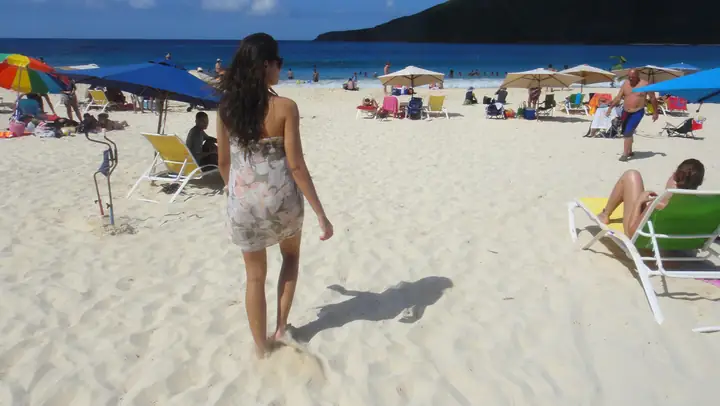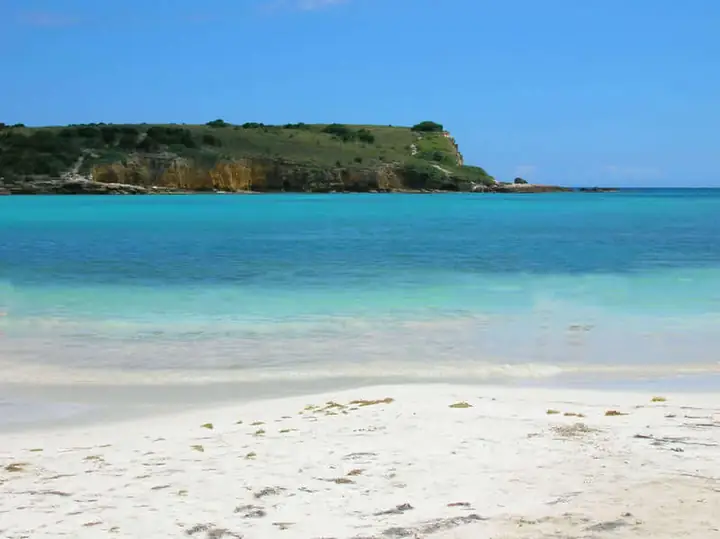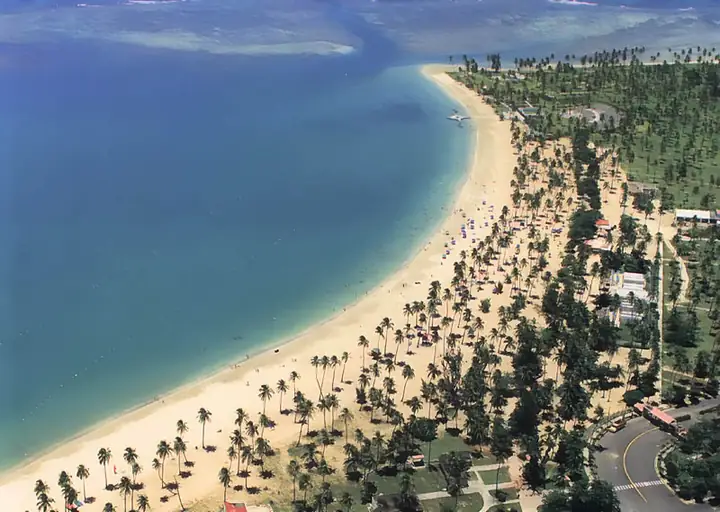
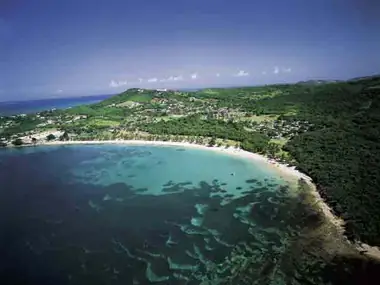
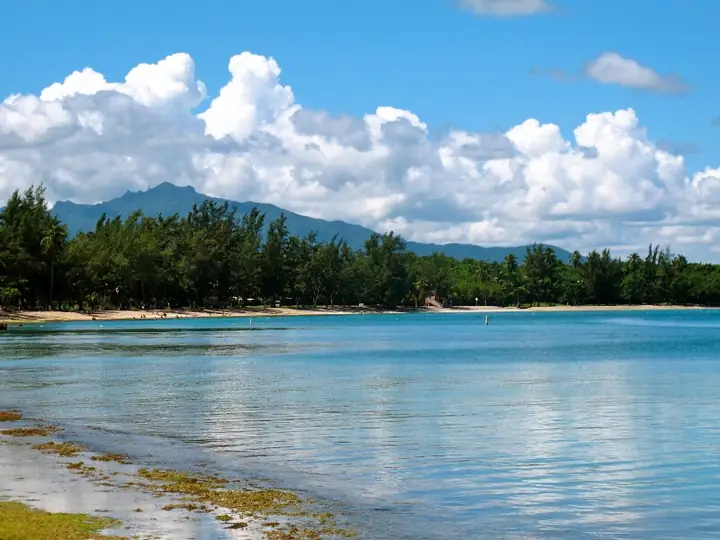
Seven Seas (Balneario Seven Seas) is Fajardo's main public beach: a crescent of soft sand at the end of PR-987 in Las Croabas, on the northeastern tip of Puerto Rico. A reef offshore breaks the Atlantic swell, so the water inside the bay is usually calm, clear and shallow, the kind of beach where small children can paddle while adults snorkel along the rocks at either end. It is also the trailhead for two of the prettiest undeveloped beaches on the east coast, which makes it a good base for a full day outdoors.
About the beach
Seven Seas is a balneario, a public beach with managed facilities, run by the Puerto Rico Department of Natural and Environmental Resources (DRNA). Behind the sand are palms, sea grape and almond trees that give some shade, and beyond them a parking area, picnic shelters, bathrooms and showers. Lifeguards are on duty when the balneario is open.
The beach was damaged by Hurricane María in 2017 and has been in recovery since. In late 2023 FEMA reported about $2.7 million allocated to rebuild the gazebos, the camping and trailer area, lifeguard towers and lighting, with the work going out to bid. Depending on when you visit, you may find some areas fenced off or newly rebuilt. Like any public beach, how clean the sand is depends on the day: after storms, seaweed and leaves wash in, and in some years sargassum has been heavy along this coast.
What to do
Swim and float. The middle of the bay is the most protected and the best for families. Pay attention to lifeguard flags, which tell you when conditions outside the reef are rough.
Snorkel. The rocky ends of the beach and the reef edge hold reef fish, sea urchins, sea stars and the odd sea cucumber. Look, but do not touch or pick anything up: many reef animals are fragile, some sting, and moving them can kill them. Never stand on coral.
Hike to Playa Colorá and Playa Escondida. From the western end of Seven Seas, a trail runs along the coast through the Northeast Ecological Corridor, a protected nature reserve between Fajardo and Luquillo. After a short walk you reach Playa Colorá, named for its reddish sand, and then Playa Escondida ("hidden beach"), a quiet cove with views back toward El Yunque. Allow 20 to 30 minutes each way to Escondida. These beaches have no facilities or lifeguards, and the water can be rougher than at Seven Seas, so swim with care. The corridor is an important nesting area for sea turtles, including leatherbacks. If you see a marked nest, keep your distance, and never use lights on the beach at night during nesting season.
Getting there and parking
From San Juan, take PR-26 and PR-66 east, continue on PR-3 to Fajardo, and follow signs for Las Croabas and Seven Seas. The balneario is at the end of PR-987, next to the entrance to the Cabezas de San Juan Nature Reserve. Allow about an hour from the airport without traffic. Parking is in the balneario's lot, which charges a fee per vehicle. On summer weekends and holidays it fills up, and the line of cars on PR-987 can back up, so arrive in the morning.
There is no practical public transport to Seven Seas. Most visitors drive, or come with a tour that combines the beach with the bioluminescent bay in the evening.
Practical tips
- Check opening days and hours. Public balnearios run on set days and hours that change from time to time. Check with the DRNA before you go, especially midweek or during the off-season.
- Bring shade. The trees cover only part of the beach; an umbrella makes a long day much easier.
- Bring water shoes if you plan to snorkel near the rocks or walk the trail.
- Food. Options at the beach are limited. Pack a cooler, or eat at the restaurants in Las Croabas a few minutes away.
- Weekday versus weekend. On weekdays you may share the beach with a handful of people; on weekends it becomes a lively local scene with music and big family groups.
- Camping. The balneario has a camping and trailer area that has been part of the post-hurricane reconstruction. Ask the DRNA about availability and reservations before you plan to stay overnight.
- Security. Do not leave valuables visible in your car or unattended on the sand.
Combine it with
Seven Seas sits next to Las Cabezas de San Juan, where guided tours show you the dry forest, mangroves and lighthouse. After a beach day, stay in Fajardo for a night kayak on the bioluminescent bay, which leaves from Las Croabas just down the road. Catamarans to Icacos Island sail from Fajardo's marinas, and Luquillo Beach and its kiosks are 20 minutes west.
Good to know
- Seven Seas is a DRNA-managed public beach with lifeguards, bathrooms, showers and paid parking.
- The water is usually calm thanks to the offshore reef, making it one of the east coast's best family beaches.
- Playa Colorá and Playa Escondida are reached on foot from the beach; they have no services.
- Rebuilding after Hurricane María has been underway, so some facilities may be closed or new when you visit.
- Arrive early on weekends; the parking lot fills.