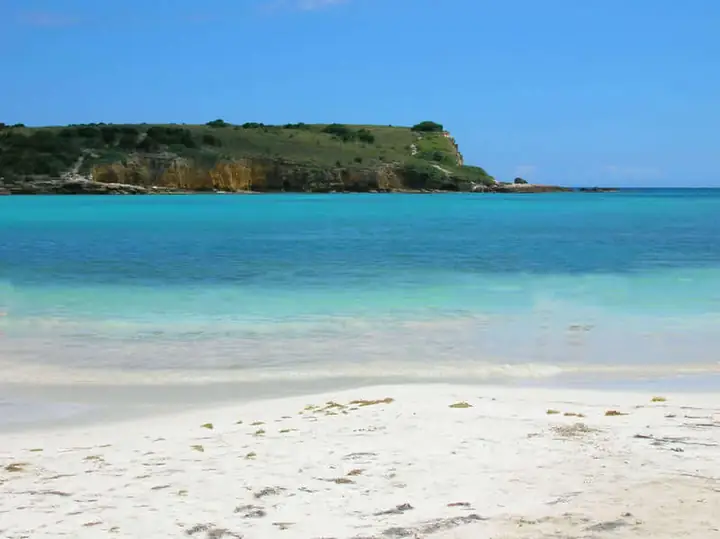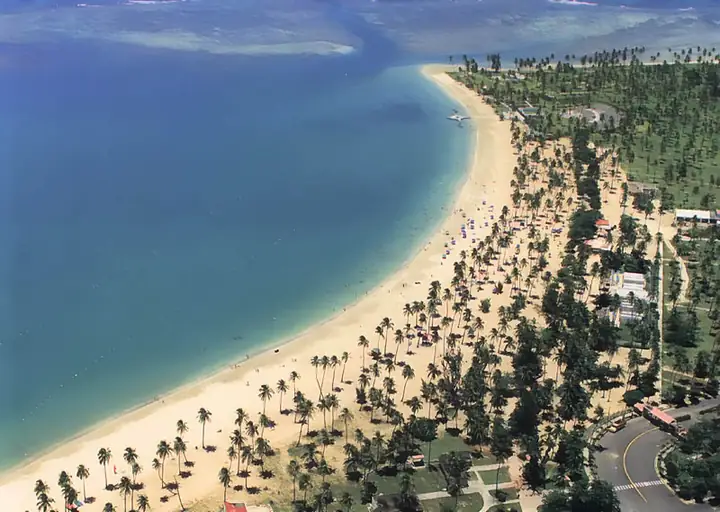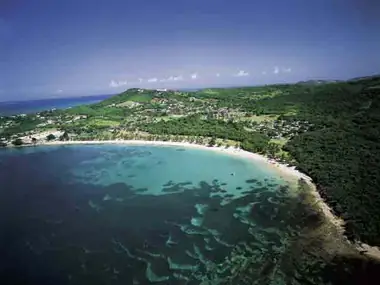
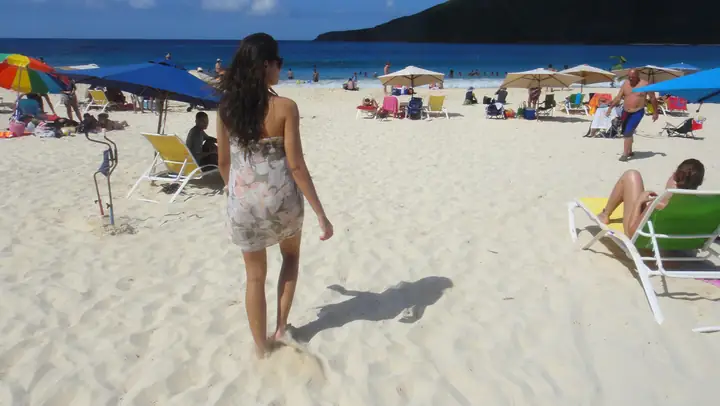
Flamenco Beach on the island of Culebra is the beach that appears on almost every list of the Caribbean's best: more than a mile of fine white sand curving around a sheltered, horseshoe-shaped bay, with water so clear and pale it looks lit from below. It sits on Culebra's north shore, a short drive from the island's only town, and it is the reason most visitors make the trip. It is also more than a pretty beach. The rusting tanks at its western end are reminders of the decades when this coast was a military target range.
From bombing range to public beach
From the early 20th century until 1975, the U.S. Navy and Marine Corps used Culebra and its surrounding cays, including the Flamenco Peninsula, for gunnery and bombing practice. A long protest movement by Culebrenses, backed by supporters across Puerto Rico, ended the exercises, and the military left in 1976. The old M4-style tanks on the beach, now covered in graffiti and murals, are the most photographed leftovers of that era.
Less visible leftovers remain too. The U.S. Army Corps of Engineers has been clearing unexploded munitions from parts of the northwestern peninsula, including portions of Flamenco Beach, the Flamenco campground and nearby Tamarindo and Carlos Rosario beaches. The beach is open and widely used, but stay on established paths and follow the Corps' "3Rs" if you ever see a suspicious metal object: recognize it, retreat without touching it, and report it to police. The peninsula beyond the beach is part of the Culebra National Wildlife Refuge and can be entered only with a special-use permit.
What to expect
Flamenco is a managed public beach with bathrooms, changing areas, outdoor showers, shaded picnic tables, and a cluster of kiosks selling food, drinks and beach-gear rentals near the entrance. Lifeguards are on duty during operating hours. Expect a small per-person entry charge and a parking fee at the gate, and expect staff to check coolers: glass containers are not allowed.
Because the bay is enclosed by reefs and headlands, the water is usually calm, shallow near the shore and very clear. Winter swells can still bring waves and currents, so watch the flags. Walk away from the entrance in either direction and the crowds thin out quickly.
Snorkeling. The rocky edges and reef at both ends of the beach hold reef fish, sea fans and the occasional turtle or ray. Bring your own mask or rent one from a kiosk. Do not stand on coral or touch wildlife.
Getting there
To Culebra. Public ferries leave from Ceiba, on Puerto Rico's east coast, not from Fajardo as older guides say. The crossing takes about an hour. Buy tickets ahead on the official Puerto Rico Ferry website or app; weekend and holiday sailings sell out. Visitor fares are a couple of dollars as of this update, but a much higher non-resident fare has been approved and postponed until at least December 31, 2026, so check current rates. You can also fly to Culebra from San Juan's main airport, Isla Grande in San Juan, or Ceiba on small commuter planes. See our ferry guide.
To the beach. Taxi vans meet the ferries and planes and run directly to Flamenco; this is the easiest option for day-trippers. Walking from town is possible but takes around half an hour or more on a hilly road in full sun. If you are staying a few days, a rented golf cart or jeep lets you combine Flamenco with other beaches. Rental cars from the main island cannot go on the ferry.
Day trip or overnight?
A day trip is doable: take an early ferry, spend the middle of the day at Flamenco, and return on an afternoon boat. But you will spend a good part of the day in transit, and a missed or cancelled boat can strand you. Staying one or two nights lets you see the beach early in the morning, before the day-trippers arrive, and visit quieter beaches such as Zoni or the island of Culebrita.
Camping. The public campground right behind the beach is run by the Culebra Conservation and Development Authority (ACDEC). It reopened in 2024 after renovations and requires a reservation; spaces are limited and fill quickly for Holy Week, summer and holiday weekends. Facilities are basic. Bring strong insect repellent, cook on a camp stove or the communal grills rather than an open fire, and buy fuel on Culebra, because propane cannot go on the ferry.
Lodging. Culebra Beach Villas sits on the beach itself; most other guesthouses and rentals are in or near town. See our Culebra Island guide for more on where to stay and how to get around.
Practical tips
- Timing. Weekdays outside holidays are quietest. Holy Week, July and summer weekends are the busiest times on the island.
- Shade. There is some shade under the trees behind the sand, but bring an umbrella or rent one, along with a hat and reef-safe sunscreen.
- Food and water. The kiosks cover lunch and drinks, but bring water, especially if you plan to walk to the far ends of the beach.
- Accessibility. The facilities are near the parking area, but reaching the water means crossing deep, soft sand.
- Leave no trace. Take your trash out with you and stay off the dunes and vegetation.
Good to know
- Ferries to Culebra leave from Ceiba, not Fajardo; book ahead.
- Flamenco has bathrooms, kiosks and lifeguards; glass is not allowed.
- Expect small entry and parking charges at the gate.
- Camping behind the beach is by reservation through ACDEC.
- Do not touch metal debris; parts of the area have been cleared of old munitions.