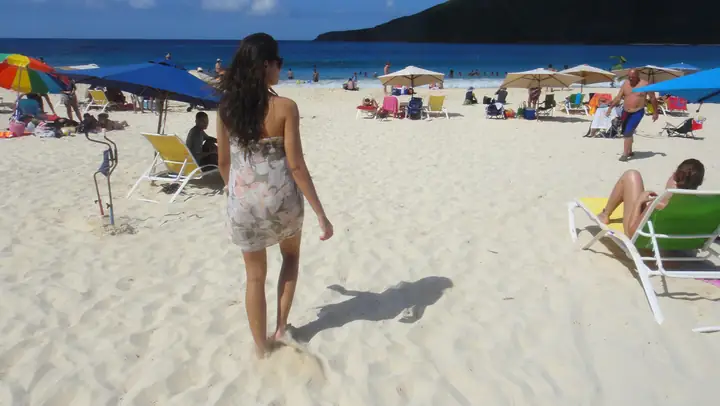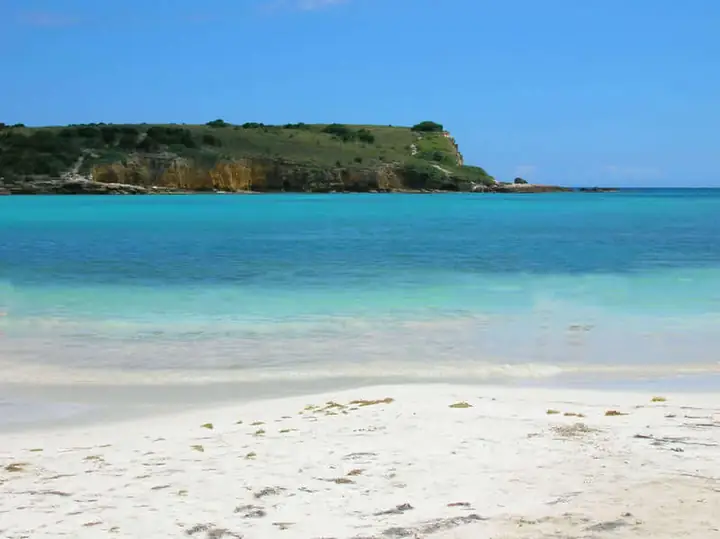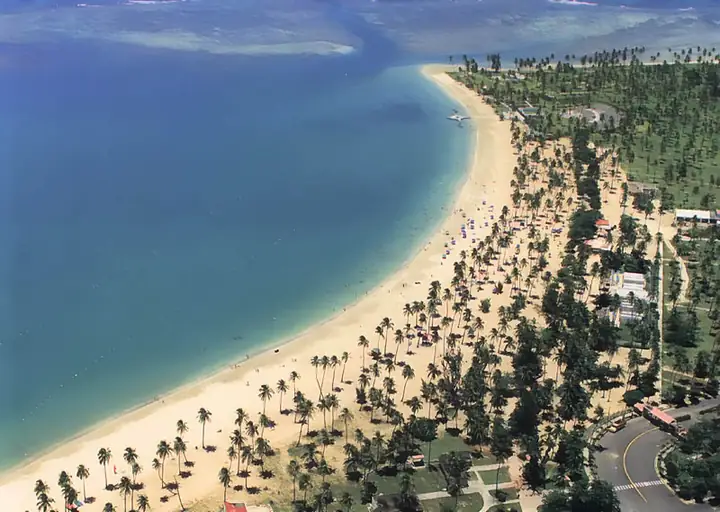
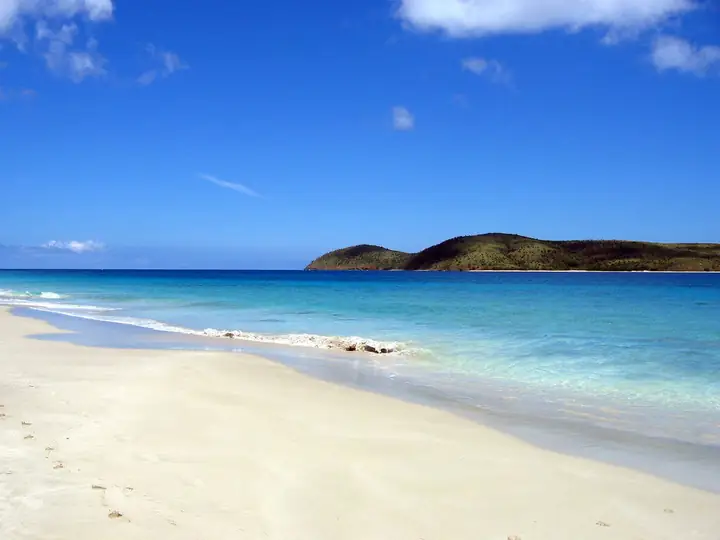
Culebra is a small island about 20 miles off Puerto Rico's east coast, roughly halfway to St. Thomas. It has one town, fewer than 2,000 residents and no big resorts, and its beaches are some of the most beautiful in the Caribbean, led by the famous Flamenco Beach. People come for the white sand and clear water, and they come back for the pace: golf carts, small guesthouses, and evenings that end early. You can see it as a day trip, but two or three nights is when Culebra starts to make sense.
A short history
Culebra was one of the last parts of Puerto Rico to be settled under Spain, in the 1880s; its town is officially Dewey, but locals just call it "el pueblo." In 1909 President Theodore Roosevelt set aside parts of the archipelago as a wildlife reserve, the origin of today's Culebra National Wildlife Refuge. For much of the 20th century, though, the U.S. Navy and Marine Corps used the island and its cays for gunnery and bombing practice. Protests by residents and supporters across Puerto Rico ended the training in 1975, and the military left the following year.
That history is still visible. Rusting tanks sit on Flamenco Beach, and the U.S. Army Corps of Engineers has spent years clearing unexploded munitions from parts of the northwestern peninsula. Most of the island's natural areas are now protected, either by the U.S. Fish and Wildlife Service or by Puerto Rico's environmental agencies, which is a large part of why Culebra still looks the way it does.
Beaches and things to do
- Flamenco Beach. More than a mile of white sand in a horseshoe bay, with bathrooms, kiosks and lifeguards, and a public campground just behind it. See our Flamenco Beach guide.
- Tamarindo and Melones. West-facing beaches near town on the Luis Peña Channel, which is protected as a marine reserve. Both are known for snorkeling over seagrass, where sea turtles feed.
- Zoni Beach. A long, quiet beach on the east end with views of Culebrita and St. Thomas, used by nesting sea turtles. See our Zoni Beach guide.
- Culebrita. A small island in the wildlife refuge, reached by water taxi or boat tour, with an old lighthouse and the natural pools known as the "Jacuzzis." See El Faro de Culebrita.
- Cayo Luis Peña. The refuge's other island open to visitors, good for kayaking and snorkeling.
- Diving and snorkeling tours from town, which reach reefs and cays you cannot get to from shore.
Within the refuge, Culebrita and Luis Peña are open from sunrise to sunset. Other refuge areas, including the Flamenco Peninsula and Monte Resaca, require a special-use permit from the refuge manager.
Getting there
By ferry. Public ferries run from the terminal in Ceiba, not Fajardo; service moved to Ceiba in 2018. The crossing takes about an hour. Buy tickets in advance on the Puerto Rico Ferry website or app, because weekend and holiday boats sell out. Visitor fares are low, but a large increase for non-residents has been approved and postponed until at least December 31, 2026, so check current rates. Visitors cannot bring rental cars on the ferry. Our ferry guide has the details.
By air. Small commuter planes fly to Culebra's airport from San Juan's Luis Muñoz Marín airport, from Isla Grande in San Juan and from Ceiba. Airlines serving the route have included Cape Air, Vieques Air Link and Air Flamenco. Flying costs more than the ferry and has strict baggage-weight limits, but it saves time and is a good backup when ferries are full or cancelled.
Getting around
The town is walkable, but the beaches are spread out. Most visitors rent a golf cart or jeep for a day or two (reserve before you arrive, especially in high season), or use the island's taxi vans, which wait at the ferry dock and airport and run to Flamenco and other beaches. Golf carts are slow and the roads are steep in places. Drive carefully, park only where it is allowed, and keep an eye out for chickens, dogs and pedestrians.
Where to stay
Lodging on Culebra means guesthouses, small inns, vacation rentals and a few apartment-style properties, most of them in or near town. Culebra Beach Villas sits on Flamenco Beach itself. Book well ahead for holidays, Holy Week and summer, and read recent reviews carefully. Book directly with the property, or through a reputable platform, and confirm in writing exactly which unit you are getting.
Camping. The public campground at Flamenco is run by the Culebra Conservation and Development Authority (ACDEC). It reopened in 2024, with renovations continuing, and works by reservation only, with limited spaces. Contact ACDEC before you go, and expect basic facilities. Insect repellent is essential.
Practical tips
- Stock up. Stores are small and prices are higher than on the main island, so buy supplies when you arrive. Bring some cash, as not every business takes cards.
- Sun and water. There is little shade at most beaches. Bring a hat, water and reef-safe sunscreen.
- Munitions. If you see a metal object that could be old ordnance, follow the Army Corps' "3Rs": recognize it, retreat without touching it, and report it to police.
- Protect the reefs and turtles. Do not stand on coral, touch turtles, or drive or walk on dunes. Keep lights off beaches at night during nesting season.
- Pace. Restaurants keep short hours and some close on certain weekdays. Plan meals ahead.
Good to know
- Ferries leave from Ceiba; flights leave from San Juan (SJU and Isla Grande) and Ceiba.
- Rental cars cannot go on the ferry; rent a golf cart or jeep on Culebra.
- Flamenco camping is by reservation through ACDEC.
- Culebrita and Cayo Luis Peña are open sunrise to sunset; other refuge areas require a permit.
- Allow at least two nights to see more than one beach.