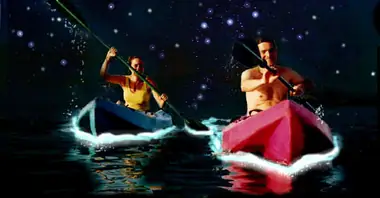
On a dark night in Puerto Mosquito, on the south coast of Vieques, every paddle stroke leaves a trail of blue-green light and fish dart away like underwater sparks. Mosquito Bay is widely regarded as the brightest bioluminescent bay in the world, and for many visitors it is the reason to make the crossing to Vieques. This guide covers how the glow works, how the bay is protected, which tours are allowed, and how to plan the trip so you see it at its best.
Why Mosquito Bay glows
The light comes from a single-celled dinoflagellate, Pyrodinium bahamense. When the water around it is disturbed, a chemical reaction inside the cell (luciferin reacting with oxygen, driven by an enzyme) releases a brief flash. Scientists think the flash works as a defense: it startles the tiny animals that graze on the dinoflagellates and can draw larger predators to them. The organisms also run on an internal clock and store far more of the light-making chemical at night, which is why the effect is a nighttime show.
What makes Mosquito Bay special is concentration. The bay is shallow, ringed by red mangroves that feed nutrients into the water, and connected to the Caribbean by a narrow mouth that keeps the organisms from being flushed out to sea. Puerto Rico's Department of Natural and Environmental Resources (DRNA) has cited scientific counts of more than 175,000 Pyrodinium per liter here, the highest recorded anywhere, and describes Puerto Mosquito as probably the last bioluminescent bay in the world in pristine condition.
How the bay is protected
The bay and its mangroves form the Vieques Bioluminescent Bay Natural Reserve (Reserva Natural Bahía Bioluminiscente de Vieques), managed by the DRNA under a co-management agreement with the Vieques Conservation and Historic Trust (Fideicomiso de Conservación e Historia de Vieques). Two rules matter most for visitors:
- No swimming. Entering the water is prohibited. Sunscreen, repellent, lotions and other substances on skin can harm the organisms. You can still trail your hand over the side of a kayak and watch it light up.
- Licensed operators only. Commercial tours must be run by concessionaires authorized by the DRNA, and motorized pleasure craft and jet skis are not part of the permitted activities. Unlicensed operators still turn up; book with an established company and ask about its permit.
The bay is resilient but not indestructible. After Hurricane María in September 2017, freshwater runoff and churned-up sediment left it largely dark for weeks. The glow returned over the following months, and guides and researchers reported it bright again. Heavy rain can still dim it for a night or two.
Choosing a tour
Most visits are guided night kayak trips. Operators typically meet guests in or near Esperanza, the small town on the south coast, then drive them down an unpaved road to the bay's launch area. Expect about two hours in total, with roughly an hour on the water. Options generally include:
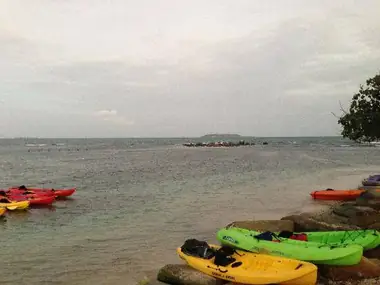
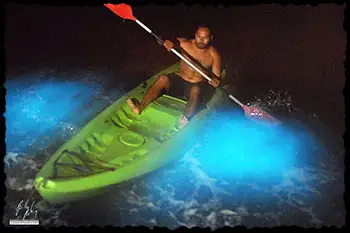
- Standard tandem kayaks, the classic way to see it. No experience is needed; the bay is sheltered and calm on most nights.
- Clear-bottom kayaks, which let you watch the light swirl beneath you.
- Small electric or low-impact boats, offered by some licensed operators for people who can't or would rather not paddle. Ask what the operator is permitted to run.
Prices change and vary by company, so compare current rates directly with licensed operators. Tours often sell out in high season (mid-December through April) and on holiday weekends, so book as soon as you know your dates.
When to go
The moon matters more than the season. Moonlight washes out the glow, so the darkest nights around the new moon are best, and a cloudy night can be surprisingly good. Operators generally do not run tours on the nights around the full moon. Check a lunar calendar before you fix your Vieques dates, and ask your operator how the bay has looked in recent nights. Phone cameras struggle to capture the effect; plan to watch rather than film.
Getting to Vieques
Vieques lies about eight miles off Puerto Rico's east coast. You have two options:
- Ferry. Passenger and cargo ferries now sail from the terminal in Ceiba (the former Roosevelt Roads base), not from Fajardo as they once did. Tickets are sold through the official Puerto Rico Ferry system; fares for non-residents rose in 2026 and service can be disrupted, so check the current schedule and buy ahead. See our ferry guide for background.
- Small plane. Commuter airlines fly to Vieques from San Juan's Luis Muñoz Marín airport and from the José Aponte de la Torre airport in Ceiba. The flight is short and avoids ferry uncertainty.
Once on the island, you'll want a rental car, jeep or taxi; many bio bay operators include transport from Esperanza to the bay.
What to bring and wear
- Clothes that can get wet, and sandals or water shoes. Launching a kayak usually means a few steps in shallow water.
- Skip sunscreen and heavy lotions that evening, out of respect for the bay.
- A light layer; it can feel breezy on the water after dark.
- A small dry bag for your phone, and cash for tips.
Accessibility: launches are on sand and shallow water with no paved access. Visitors with limited mobility should ask operators directly whether they can assist or offer a boat option.
Combine it with
Spend the day at the beaches of the Vieques National Wildlife Refuge, starting with Red Beach (Playa Caracas), then have an early dinner in Esperanza before your tour. If you can't fit in Vieques, Puerto Rico's other two bio bays are on the main island: Laguna Grande in Fajardo and La Parguera in Lajas. Our overview of Puerto Rico's bio bays compares all three. Neighboring Culebra is reachable from the same Ceiba terminal.
Good to know
- Swimming in Mosquito Bay is prohibited; only DRNA-licensed operators may run tours.
- Go near the new moon; tours are generally not run around the full moon.
- Ferries leave from Ceiba. Confirm schedules, and consider flying if your timing is tight.
- Book tours early in winter and on long weekends.
- Rain can dim the glow temporarily; ask your operator about recent conditions.