La Parguera is a waterfront village in the municipality of Lajas, on Puerto Rico's southwest coast, where fishing boats, stilt houses and tour docks share a shoreline laced with mangrove channels. It is best known for its bioluminescent bay, one of three in Puerto Rico, but the real draw is the whole package: a sheltered sea dotted with small cays, some of the best diving on the south coast, and a lively, unpretentious village that fills up with families from around the island on weekends.
What makes La Parguera special
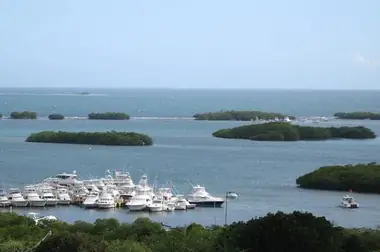
Much of the coast and sea here is protected as the La Parguera Natural Reserve, designated in 1979 and managed by Puerto Rico's Department of Natural and Environmental Resources (DRNA). It covers mangrove forests, lagoons, salt marshes, coral reefs and dozens of small cays, among them Isla Mata la Gata and Cayo Caracoles. The reefs and mangroves shelter the water, which is why the bay is usually calm and why marine life is so rich.
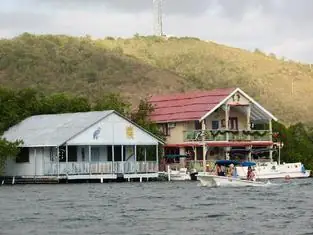
The village itself has changed a lot from the quiet fishing community of a few decades ago. Today the main strip has restaurants, bars, ice cream and souvenir shops, guesthouses and small hotels, plus the dock where boat operators sell trips. Many of the colorful wooden houses built over the water on the cays are private vacation homes, and their future has been the subject of ongoing DRNA regulation and public debate.
The bioluminescent bay
La Parguera's Bahía Fosforescente glows for the same reason as the bays in Vieques and Fajardo: concentrations of single-celled dinoflagellates that flash blue-green when the water is disturbed. It is generally considered less intense than Vieques' Mosquito Bay, and its condition has been a concern for the DRNA, which in June 2023 issued Administrative Order 2023-02 to tighten management of the bay.
Under that order the bay is closed for three nights around each full moon, when the glow is weakest anyway. The order also targets people visiting without the required permits and using motorboats illegally. In practice, that means you should visit with an established, authorized operator.
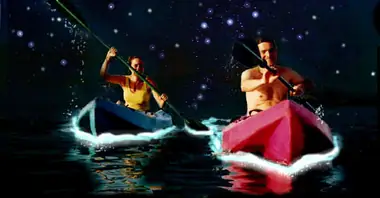
Trips leave from the village waterfront after dark and include motorboat rides, guided kayak tours and pedal-powered water bikes. Whether passengers may get into the water depends on current DRNA rules and on each operator, and the rules have tightened in recent years, so ask before you book rather than assuming a swim is included. Choose a night close to the new moon, and expect the effect to be subtler than in Vieques.
Cays, snorkeling and diving
By day, boat operators at the village dock run trips through the mangrove channels and out to the cays. The best-known spot is Playita Rosada, a small swimming area tucked among the mangroves, and the shallow reefs around the cays are good for snorkeling on calm days.
For divers, La Parguera's big attraction is "La Pared" (the Wall), where the shelf off the coast drops away into deep water. It's a well-known site for wall dives with coral, sponges and large fish, and local dive shops run trips when conditions allow. Book with a certified shop and expect the boat ride out to take a while.
Kayaks and paddleboards can be rented in the village for exploring the mangrove channels on your own. Stay in the channels, watch for boat traffic, and keep off the fragile seagrass and coral.
Getting there
La Parguera is about two and a half hours by car from San Juan in normal traffic. The usual route follows PR-52 south to Ponce, then PR-2 west and PR-116 toward Lajas, and finally PR-304 into the village. From Mayagüez it's under an hour. There is no practical public transport for visitors, so a rental car is the way to go. Parking along the main strip is limited and fills up on weekends and holidays; arrive early or use paid lots.
Practical tips
- Timing: weekdays are much quieter. Weekends, long weekends and the summer school break bring big crowds and loud music on the water.
- Bio bay night: pick a date near the new moon and avoid the three full-moon closure nights.
- Bring: reef-safe sunscreen, a hat, water shoes, insect repellent for evenings near the mangroves, and a dry bag.
- How long: a day trip covers a cay outing and the bio bay; an overnight lets you relax and avoid the drive back in the dark.
- Accessibility: boat access usually involves stepping down from docks; ask operators about assistance.
Combine it with
La Parguera sits in the middle of the southwest's best coast. To the west are the beaches of Combate and Boquerón, and the cliffs at Los Morrillos lighthouse in Cabo Rojo. To the east is Guánica, home to the dry forest and Gilligan's Island. The colonial town of San Germán, with its Porta Coeli church, is a short drive inland, and the area is a favorite for bird watching. Compare the island's three glowing bays in our bio bay overview.
Good to know
- The bio bay closes for three nights around every full moon under DRNA Administrative Order 2023-02.
- Book bay and cay trips with authorized operators; ask about current swimming rules before you go.
- The glow is dimmer than in Vieques; go on a dark night.
- Weekends are busy and parking is tight.
- The reserve's reefs and mangroves are protected; don't anchor on, stand on, or touch coral.