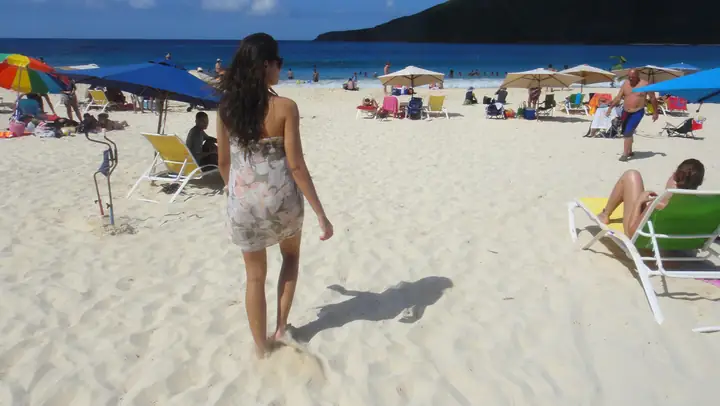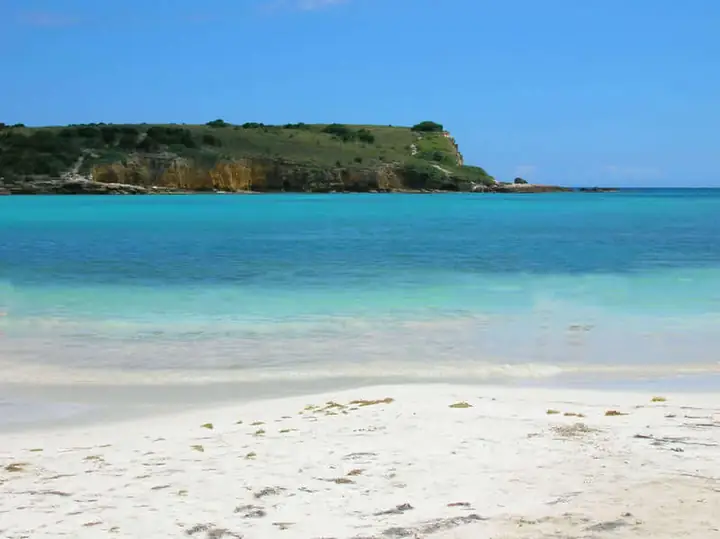
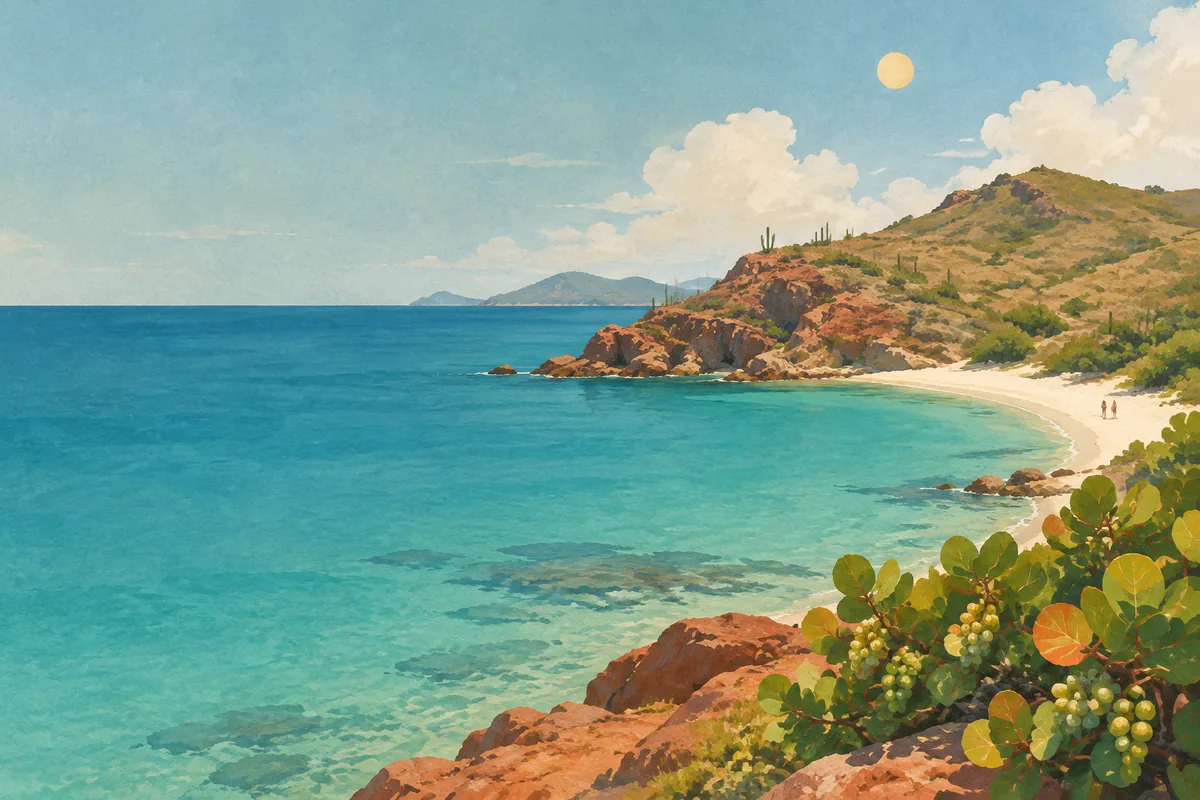
Red Beach, known to Viequenses as Playa Caracas, is a calm crescent of pale sand and clear turquoise water on the south coast of Vieques, backed by low green hills and sea grape. It sits inside the Vieques National Wildlife Refuge, on land the US Navy used for decades, and it is the first beach you can drive to after entering the refuge's eastern section. That combination of easy access, gentle water and almost no development makes it the beach most first-time visitors to Vieques end up loving.
From Navy range to wildlife refuge
For most of the second half of the twentieth century, the US Navy controlled the eastern and western ends of Vieques for training and live-fire exercises. After years of protest, Congress transferred the former Navy lands to the US Fish and Wildlife Service in two steps, in 2001 and 2003. The result is the Vieques National Wildlife Refuge, about 17,771 acres and the largest national wildlife refuge in the Caribbean.
The Navy-era names stuck. Beaches were labeled by color on military maps, which is why you'll hear Red Beach for Caracas, Blue Beach for La Chiva and Green Beach for the western tip at Punta Arenas. Locals and road signs increasingly use the Spanish names, so it helps to know both.
That history also explains the refuge's biggest rule. A large part of the eastern refuge remains closed because of unexploded ordnance and the ongoing cleanup. The beaches and roads open to the public have been cleared for visitor use, but you must stay on designated roads, trails and beaches, never enter fenced or signed closed areas, and never touch metal objects you find on the ground or in the water.
What you'll find
Caracas faces the Caribbean, so the water is usually calmer than on the island's north side, with small waves that kids enjoy and good swimming on most days. Rocky points frame each end of the beach. When the sea is flat, snorkeling around the rocks can turn up reef fish, but visibility and currents vary, so check conditions and stay close to shore.
Facilities are basic: a handful of shaded picnic gazebos, which go quickly on weekends, and trash cans. There are no restrooms at the beach itself; the nearest are at the refuge office near the entrance, a short drive back. There are no lifeguards, food vendors or chair rentals. Bring everything you need and carry out what you bring in.
Getting there
To Vieques. Ferries to Vieques depart from Ceiba on Puerto Rico's east coast (they no longer leave from Fajardo). Buy tickets through the official Puerto Rico Ferry system and check current schedules, since fares for non-residents went up in 2026 and service is occasionally disrupted. Small commuter planes also fly to Vieques from San Juan and Ceiba. See our ferry guide for background.
To the beach. From Esperanza or Isabel II, follow PR-997 to the eastern refuge entrance and continue on the refuge road; Caracas is the first signed beach turnoff, at the end of a short paved road. A rental car or jeep gives you the most freedom. Island taxis can also drop you off, but there is no taxi stand at the beach, so agree on a pickup time before the driver leaves.
Hours and rules
The refuge is open year-round with no entrance fee, and the beach areas are open during daylight hours. Gates close in the evening, so don't plan a sunset picnic without confirming the current closing time at the refuge office or on the US Fish and Wildlife Service page. Key rules from the refuge:
- No camping and no open fires; use the grills at gazebos where provided.
- Pets must be on a leash.
- Drones and other unauthorized aircraft are prohibited.
- Stay on designated roads and out of closed areas because of unexploded ordnance.
- Don't disturb nesting sea turtles or their tracks; several refuge beaches are nesting sites.
Practical tips
- Arrive early on weekends and holidays if you want a gazebo; weekdays are quieter.
- Bring shade, water and food. There is little natural shade on the sand and nothing to buy nearby.
- Use reef-safe sunscreen and reapply often; the Caribbean sun here is strong year-round.
- Secure your car. Leave nothing visible inside, as at any remote beach parking area.
- Plan a half day or more, and pair it with other refuge beaches.
Accessibility: the parking area is close to the sand, but there are no boardwalks or beach wheelchairs, and restrooms are back at the refuge office.
Combine it with
Red Beach is the start of a string of refuge beaches along the south coast, including La Chiva (Blue Beach) farther east, and the refuge's trail system also reaches spots such as Puerto Ferro. Have lunch or dinner in Esperanza, then join a night tour of Mosquito Bay, the bioluminescent bay, which is a short drive away. If you're building a longer island-hopping trip, Culebra and its famous Flamenco Beach are served from the same ferry terminal in Ceiba. For more ideas, browse our beach guides.
Good to know
- Caracas is inside the Vieques National Wildlife Refuge; entry is free.
- Open during daylight hours only; confirm the closing time before you go.
- No restrooms at the beach; the nearest are at the refuge office.
- Stay on marked roads and beaches; parts of the eastern refuge remain closed for ordnance cleanup.
- Green Beach is not nearby; it is at the opposite (western) end of the island.