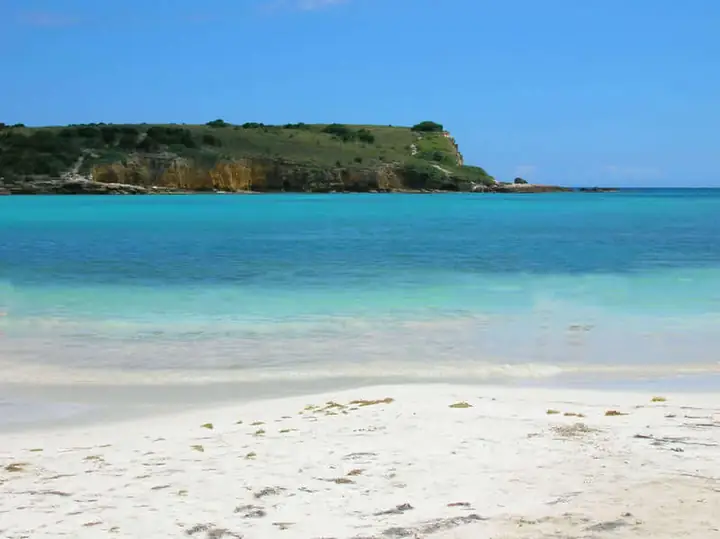
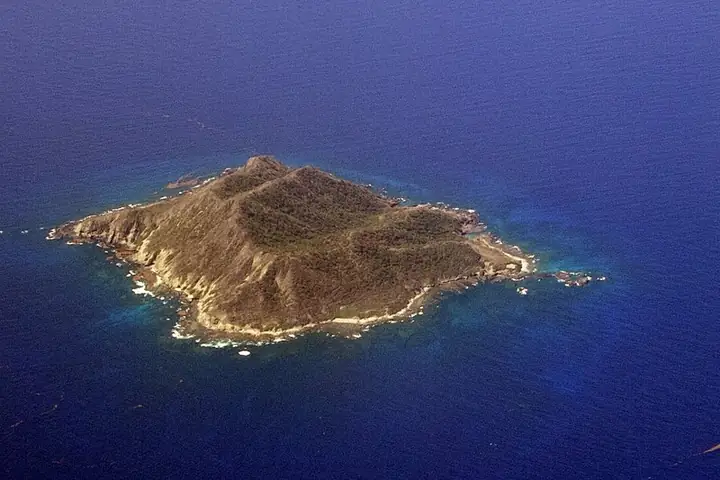
Isla de Mona sits in the middle of the Mona Passage, the strait between Puerto Rico and the Dominican Republic, about 41 miles west of Puerto Rico's main island. It is a flat limestone plateau about 7 miles long and 4 miles wide, ringed by sheer sea cliffs and riddled with caves. Nobody lives there except rotating staff from the Department of Natural and Environmental Resources (DRNA). There are no hotels, no stores and no regular ferry. Visiting means planning a self-sufficient camping expedition with a permit, and the reward is one of the wildest places in the Caribbean.
Why Mona matters
Together with tiny Monito Island and the surrounding waters, Mona is protected as the Isla de Mona and Monito Natural Reserve. It was also designated a National Natural Landmark in 1975. The island is home to species found nowhere else, most famously the Mona ground iguana and the Mona boa. Its beaches are one of the most important nesting grounds in the region for hawksbill sea turtles. Offshore, the reefs and walls draw divers and researchers.
People have left their mark here too. Archaeological work has documented a substantial Taíno presence, including cave sites with Indigenous imagery. After the Spanish arrived, the island was a stopover for passing ships, and during Prohibition it served as a smuggling hub. From the mid-1800s until 1927, crews mined guano from its caves for fertilizer. A lighthouse completed around 1900 operated until 1976.
How camping permits work
You can only stay on Mona by camping in designated areas, and you need a DRNA permit. According to DRNA's Mona camping page:
- Apply early. DRNA requires a minimum of five business days before your arrival date. In practice, apply much earlier, especially for holiday periods.
- Reserve by phone. Call DRNA's Land Use and Forest Permits Section at (787) 999-2200, extensions 5613 or 5610, to check availability and reserve.
- Complete the paperwork within 24 hours. The reservation is held for 24 hours. In that time, you must deliver the completed application, payment and required documents to a DRNA office.
- Pay the fee. DRNA lists the camping fee as $10 per person per night.
There are two camping areas: Playa Sardinera, with room for 60 people, and Playa Pájaros, with room for 50. When you arrive, you hand your signed permit to the DRNA management officer or ranger, and your group leader must tell staff which hikes you plan and roughly how long they will take.
The rules
Mona's rules are strict, and rangers enforce them. Highlights from DRNA's list:
- Camp only in the designated areas at Sardinera and Pájaros. No camping or excursions inside the caves.
- No campfires, candles or fuel lamps. Use only flashlights and battery lamps. Cook only in the structures provided for cooking.
- No alcohol, no pets and no firearms, except for authorized hunters in season.
- No rappelling or climbing anywhere in the reserve. Stay away from cliff edges.
- Don't feed, disturb or collect wildlife, plants, rocks or anything else.
- Don't tie hammocks or tarps to trees.
- Carry all your trash back to Puerto Rico. DRNA inspects campsites.
- Monito Island is off limits to everyone except authorized researchers.
- Fishing is allowed only where Puerto Rico's fishing regulations permit it. Bikes are allowed at your own risk on the main road between Sardinera and the lighthouse, with protective gear.
Getting there
There is no public ferry. Most visitors cross on licensed private charters or organized excursions from Puerto Rico's west and southwest coasts, mainly from the Cabo Rojo area, or on their own boats. The crossing is long, open-water and often rough, and trips depend on the weather. Confirm that your operator is licensed and knows the landing procedures, and build weather days into your plans.
Hunting season
Goats and feral pigs are introduced species on Mona. DRNA notes that pigs destroy the nests of sea turtles and Mona iguanas, and that goats degrade the island's plant communities. To control them, DRNA runs a regulated hunting season roughly from December through March, the only hunting of its kind in Puerto Rico. Hunters camp at the same Sardinera and Pájaros sites. If you are not hunting, ask DRNA how the season affects availability and which areas to avoid on your dates.
What to bring
- All of your drinking water and food for the whole stay, plus extra in case weather delays your return.
- A tent, sleeping gear, a first-aid kit, sun protection and good closed shoes for sharp limestone trails.
- Flashlights and spare batteries.
- Strong trash bags, because everything goes back with you.
- Snorkel gear for the reefs.
Good to know
- Mona is a remote reserve, not a resort. There is no cell coverage you can count on, and medical help is far away.
- The trails are hot and exposed, and getting lost in the island's dense dry forest and cave country is a real risk. Tell rangers your plans, as the rules require.
- Rules, fees and seasons can change. Confirm everything with DRNA when you reserve.
- Planning a west-coast trip first? See Cabo Rojo Lighthouse, Boquerón and Rincón Lighthouse, where the Mona Passage is right in front of you.