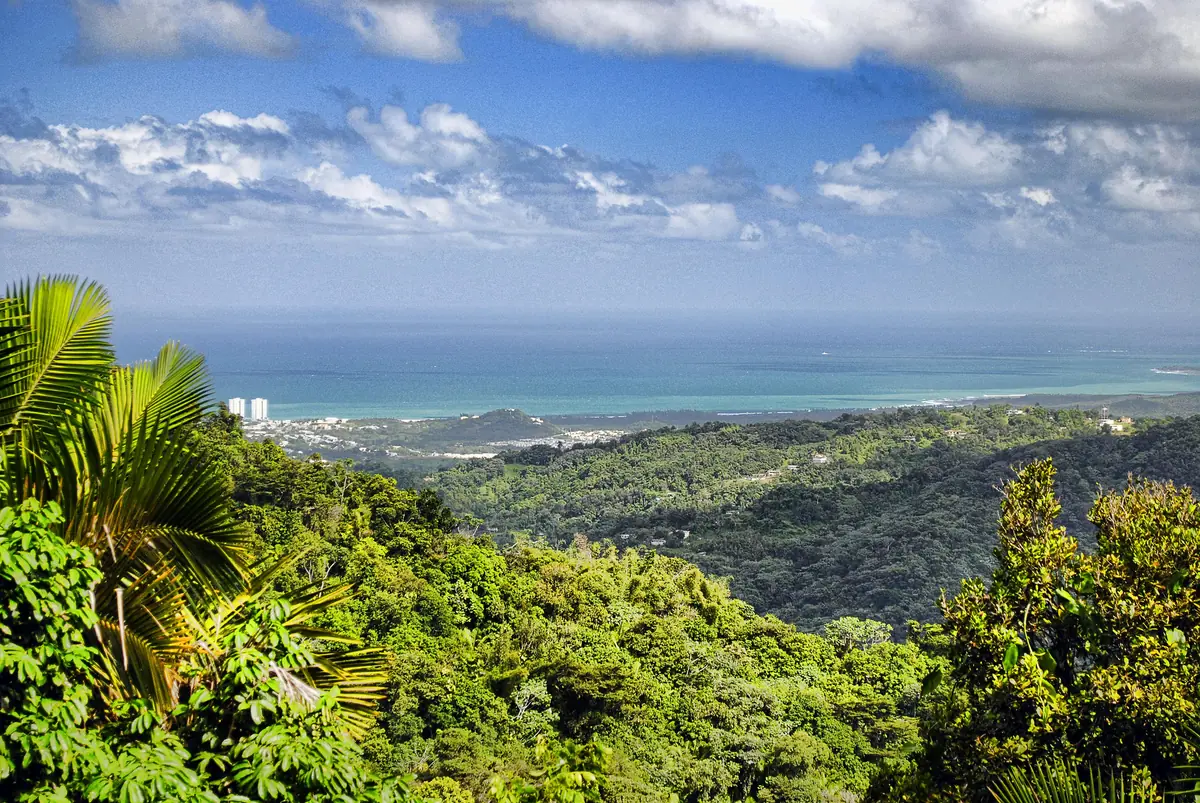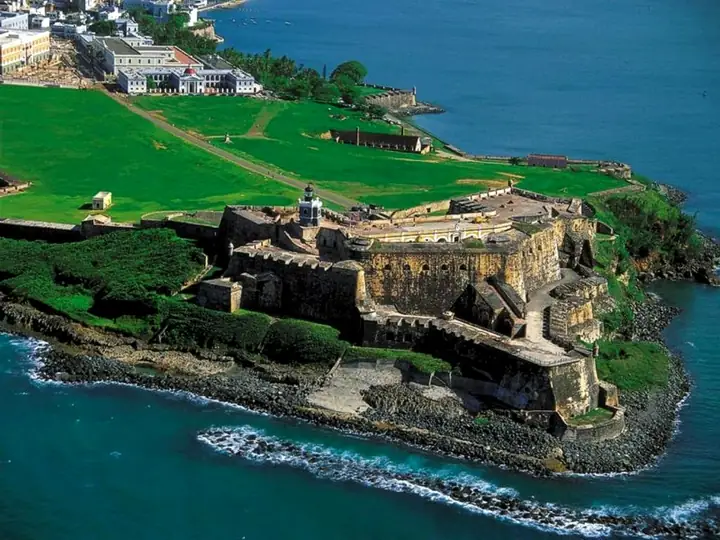
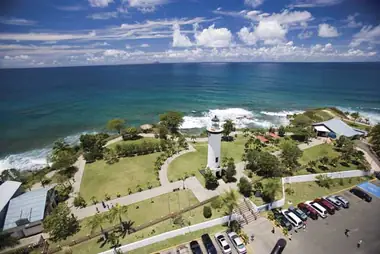
At Punta Higüera, the westernmost point of mainland Puerto Rico, a white lighthouse stands on a grassy bluff above some of the best-known surf breaks in the Caribbean. The lighthouse park around it is Rincón's living room. Surfers check the waves from here, families picnic under the shelters, and in winter people scan the Mona Passage for the spouts of humpback whales. Most evenings, a crowd gathers to watch the sun drop into the sea behind Desecheo Island. Entry is free, and it is one of the easiest and most rewarding stops on the west coast.
A short history
Spain built the first lighthouse here in 1892 to close a gap in the chain of lights between Punta Borinquen in Aguadilla and Cabo Rojo. Ships crossing the Mona Passage relied on these lights. The original building was severely damaged in the 1918 earthquake that shook western Puerto Rico. Its replacement, the tower you see today, is a concrete structure about 69 feet tall, and it went into service in January 1922.
The light was automated in 1933. Later, the keepers' buildings were damaged by fire and torn down, so the tower now stands alone. The lighthouse still works as an aid to navigation and is listed on the U.S. National Register of Historic Places. The site was long known as Punta Higüero, and the municipality notes that the name Punta Higüera has been used officially since 1953, so you will see both spellings. In 1993, the grounds were restored and turned into a public park.
What you'll find in the park
- The lighthouse. It is a working light, so you admire it from the outside. Visitors generally cannot climb the tower.
- Lookout points. Paved paths, lawns and shaded shelters line the bluff. From the edge you look straight down on the surf breaks and out across the Mona Passage. On clear days Desecheo Island stands out on the horizon to the northwest.
- Whale watching. Humpback whales pass through the Mona Passage in winter. The municipality says the peak season runs from December to March, and January through March is the most reliable window. Bring binoculars and look for spouts and breaches. Patience pays off.
- Surf watching. The breaks on either side of the point, including Domes to the north and Indicators to the south, are for experienced surfers. Watching them from the bluff in a winter swell is a show in itself.
- Snacks and restrooms. The park has had a small refreshment stand and public restrooms, but their hours vary.
The dome next door
Just north of the lighthouse sits a large dome. It houses the decommissioned BONUS nuclear plant, an experimental reactor, and it gave Domes Beach its name. The building is generally not open to visitors, but it makes an unusual backdrop for photos.
Getting there
The park is in Barrio Puntas, a few minutes from Rincón's town center. From PR-413 in Rincón, follow signs for "El Faro" onto the short access road (PR-4413) that ends at the park. From San Juan, it is a long drive west via PR-22 and PR-2, well over two hours in most traffic. Aguadilla's airport is much closer. There is free parking at the park, but it gets busy around sunset in high season. There is no useful public transport, so you will need a car.
Practical tips
- Time it for sunset. Arrive 45 minutes early to get parking and a good spot on the wall.
- Winter is peak season for both whales and big surf, and also for crowds. Summer evenings are calmer and still beautiful.
- Stay back from the edge. The bluff edges are rocky and drop sharply to the reef.
- Accessibility. The main paths are paved and mostly level, so the park works well for strollers and wheelchairs.
- Bring a light layer. The breeze on the point can be stiff after dark.
- Allow 45 minutes to an hour, or longer if you are watching for whales.
Nearby
- Crash Boat Beach in Aguadilla, to the north, for snorkeling and a lively beach scene.
- Playa Jobos in Isabela, farther up the coast.
- Isla de Mona, the protected island out in the Mona Passage. You can't see it from here, but some trips leave from the west coast.
- Boquerón and Cabo Rojo Lighthouse, to the south, for beaches, seafood and the red cliffs of Los Morrillos.
- Mayagüez Zoo, a family stop on the way south.
Good to know
- Park entry and parking are free.
- Look for signs to "El Faro" or "Parque El Faro." Locals rarely use the formal name.
- The lighthouse is an active aid to navigation and is not open for tower climbs.
- Whale sightings are never guaranteed. The best odds are on calm mornings and late afternoons from January to March.